

Machine Vision

Wearable

AI • AGEnts
23
YEARS EXPERIENCE
3
TECHNOLOGY COMPANIES
Multiple
PATENTS FILED/GRANTED
01
Selected Work
Case Studies

Global Trend Engine
Designer & Builder
•
Self-Initiated
•
1 week
→
An agentic AI dashboard where three agents — a multi-persona scanner, Nostradamus, and Tarot — scan the web for frontier signals, synthesize patterns, and generate predictive convergence insights — designed, built, and deployed with Claude.
Lytx Video Overlay
Senior UX Designer
•
Lytx
•
4 months
→
A dynamic video overlay that simplifies customer coaching conversations, improving user trust, and reducing contention rate to near zero.

Lytx Driver ID
Senior UX Designer
•
Lytx
•
3 months
→
A systematic user flow for assignment, distribution, and usage of QR codes to assign drivers to vehicles.
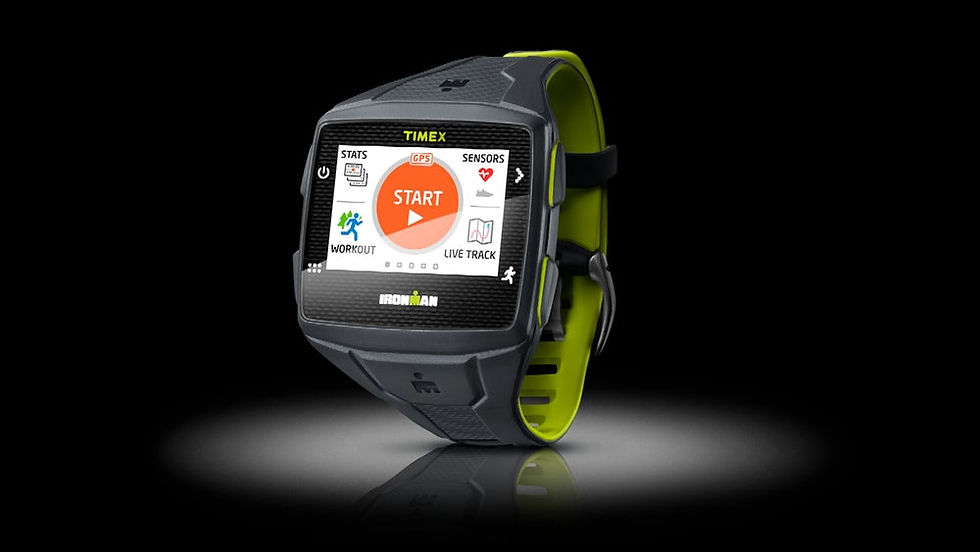
Timex Ironman ONE GPS+
UX Design Lead
•
Qualcomm / Timex
•
3 years
→
A full 0-to-1 product experience for athletes who wanted to track workouts, stay connected, and leave their phones behind.

Tagg the Pet Tracker
UX Design & Product Management
•
Qualcomm
•
1.5 years
→
Redesign of a pet activity monitoring and management of iOS/Android app development as both UX lead and product manager.

FLO TV Personal Television
UX Design Lead
•
Qualcomm / FLO TV
•
1 year
→
Designing a new product category from the ground up: live mobile television.
02
Expertise
Skills
User Research
Interviews, usability tests, ethnographic study, and contextual inquiry
Journey Mapping
End-to-end experience mapping across touchpoints
Interaction Design
Flows, wireframes, use cases, and high-fidelity mockups
Storytelling
Communicating design decisions to executives and cross-functional teams
Systems Thinking
Mapping connected flows and designing for scalability across surfaces
Prototyping
From low-fi click-throughs to high-fidelity AI coding
AI Fluency
Designing AI-powered experiences and using AI tools in the design process
Stakeholder Management
Cross-functional collaboration and design advocacy
Tools
Claude (Design/Code)
Research synthesis, design, prototyping, and documentation
Figma
Components, variants, auto-layout, and prototyping
Sketch
Vector UI design for components and high-fidelity screens
Axure RP
High-fidelity prototyping with conditional logic
Pendo
In-app guidance, feature tracking, and user surveys
Amplitude
Funnels, retention, and feature-adoption analysis
Dovetail
Centralized research insights and customer intelligence
Atlassian (Confluence/Jira)
Confluence for design documentation; Jira for planning and cross-functional tracking
03
Background
Experience & Education
2019 - Present
Senior Product Designer
Lytx • San Diego, CA
Research and design of user experience for video-safety and AI products, and development of an AI-native design process for the Product/UX team.
2007 - 2018
Sr. Staff UX Designer & Sr. Product Manager
Qualcomm • San Diego, CA
Led 0-to-1 UX and product development for large-scale product start-ups while managing 3rd-party design teams.
2003 - 2007
UI Designer
Nokia • San Diego, CA
Designed new phone features while serving as the only North American member of Nokia's global design-management team.
1998 - 2002
B.S. Symbolic Systems
Stanford University • Stanford, CA
Interdisciplinary study of computer science, linguistics, philosophy, and psychology with a concentration in human-computer interaction.
My Résumé
Name
Daniel Rivas
current role
Senior Product Designer
Location
San Diego, CA
Availability


Daily Futurology Report
October 27, 2026 at 12:11:43 AM
Model:
Opus 4.8
Forecast:
2026–2029
The Loop Gets a Prospectus: Through 2029 the Hardware Still Sets the Clock — Now the Financing Is Public and the Ground Is Pushing Back
Here's the bet. The scarce thing is still physical — power that's actually energized, chips that actually ship, a trial that actually reads out — but the financing holding all that concrete and silicon up keeps getting more circular, and this week it got more visible: it's in an S-1 now. I'd watch two things from here, the financing loop and the permitting fights, more than the capability curve.
The deal flow tells it. Anthropic owing roughly $417 billion for compute, Broadcom spinning up $63 billion to lease it chips, Alphabet into negative free cash flow, Meta punished for its capex. And underneath all of it, 106 projects worth about $198 billion stalled by people who don't want a data center next door. Every one of those is a commitment made ahead of the payoff — now meeting a bill, or a neighbor.
I'd expect the first real tell this week, honestly. Microsoft and Alphabet report Wednesday, Amazon Thursday, and the question is finally narrow: does the AI revenue cover the AI spend, or doesn't it. Call the broader reckoning 2027, maybe 2028 — the first quarter a circular-financing question gets a non-circular answer, or a flagship campus dies in a permit hearing. Not a crash necessarily. Just the first time the loop gets tested in public.
Worth holding loosely, though. 'This looks circular' has been the bears' line for over a year now and the build-out just kept going, because sometimes the demand really is there and the loop is only how capital-intensive industries bootstrap. Maybe earnings come in fine and the permitting fights stay local noise. I don't think it's that clean — but I've called a top too early before, and visible leverage is not the same thing as fragile leverage.
Cross-Domain Synthesis
The loop got a new node this week. Yesterday the story was Nvidia backstopping OpenAI; today Anthropic filed to go public and put its own number on paper — roughly $417 billion owed to compute providers, with Forbes stretching the full tab toward a trillion through 2045 — while Broadcom stood up a $63 billion vehicle, bankrolled by BofA, Blackstone, Citi and Morgan Stanley, just to lease it chips. Elon Musk turns up as a landlord. You almost have to admire the choreography.
Same pattern as ever: commitment racing ahead of proof. Alphabet has already raised 2026 capex to $195–205 billion and posted its first-ever negative free cash flow; Meta guided to $125–145 billion and got its stock clipped 6–8% for the honesty. The physical bill underneath hasn't softened — Wood Mackenzie has the global SMR pipeline up 42% in a single quarter, and Taiwan just wrote chip smuggling into criminal law and indicted nine people, an Nvidia manager among them. Power and silicon are still the hard parts. The financing is just the part you can now read in a prospectus.
Here's the thing that's actually new: the ground is pushing back. Anthropic's own S-1 admits it — 106 data-center projects, about $198 billion of them, blocked or delayed by local opposition in the first half of this year alone. A rural Australian town is already fighting the Western Downs campus that's meant to be its first big tenant. Turns out the binding constraint isn't only megawatts. It's whether the neighbors will let you pour the concrete.
And the one ledger that still doesn't take IOUs hasn't moved. AMOC at its weakest in over a thousand years, some modeling putting the onset of collapse as early as 2060, the WMO still logging record heat. You can refinance a chip lease. You can reroute around an angry zoning board. You cannot renegotiate the Atlantic. That's the asymmetry worth holding onto: almost every clock in this scan is slow, human and reschedulable, and one of them is none of those things.
05
Horizon: Predictive convergence
Futurology Report — Daily
October 27, 2026 at 12:11:43 AM
AI Model:
Opus 4.8
Forecast:
2026–2029
The Loop Gets a Prospectus: Through 2029 the Hardware Still Sets the Clock — Now the Financing Is Public and the Ground Is Pushing Back
Here's the bet. The scarce thing is still physical — power that's actually energized, chips that actually ship, a trial that actually reads out — but the financing holding all that concrete and silicon up keeps getting more circular, and this week it got more visible: it's in an S-1 now. I'd watch two things from here, the financing loop and the permitting fights, more than the capability curve.
The deal flow tells it. Anthropic owing roughly $417 billion for compute, Broadcom spinning up $63 billion to lease it chips, Alphabet into negative free cash flow, Meta punished for its capex. And underneath all of it, 106 projects worth about $198 billion stalled by people who don't want a data center next door. Every one of those is a commitment made ahead of the payoff — now meeting a bill, or a neighbor.
I'd expect the first real tell this week, honestly. Microsoft and Alphabet report Wednesday, Amazon Thursday, and the question is finally narrow: does the AI revenue cover the AI spend, or doesn't it. Call the broader reckoning 2027, maybe 2028 — the first quarter a circular-financing question gets a non-circular answer, or a flagship campus dies in a permit hearing. Not a crash necessarily. Just the first time the loop gets tested in public.
Worth holding loosely, though. 'This looks circular' has been the bears' line for over a year now and the build-out just kept going, because sometimes the demand really is there and the loop is only how capital-intensive industries bootstrap. Maybe earnings come in fine and the permitting fights stay local noise. I don't think it's that clean — but I've called a top too early before, and visible leverage is not the same thing as fragile leverage.
Signal Intensity
A domain-level score (0-100) representing the volume and momentum of frontier activity detected across the signals in that domain.
AI
95
%
Climate
60
%
BIOTECH
64
%
GEOPOLITICS
82
%
ENERGY
90
%
SOCIETY
85
%
SPACE
60
%
Cross-Domain Synthesis
The loop got a new node this week. Yesterday the story was Nvidia backstopping OpenAI; today Anthropic filed to go public and put its own number on paper — roughly $417 billion owed to compute providers, with Forbes stretching the full tab toward a trillion through 2045 — while Broadcom stood up a $63 billion vehicle, bankrolled by BofA, Blackstone, Citi and Morgan Stanley, just to lease it chips. Elon Musk turns up as a landlord. You almost have to admire the choreography.
Same pattern as ever: commitment racing ahead of proof. Alphabet has already raised 2026 capex to $195–205 billion and posted its first-ever negative free cash flow; Meta guided to $125–145 billion and got its stock clipped 6–8% for the honesty. The physical bill underneath hasn't softened — Wood Mackenzie has the global SMR pipeline up 42% in a single quarter, and Taiwan just wrote chip smuggling into criminal law and indicted nine people, an Nvidia manager among them. Power and silicon are still the hard parts. The financing is just the part you can now read in a prospectus.
Here's the thing that's actually new: the ground is pushing back. Anthropic's own S-1 admits it — 106 data-center projects, about $198 billion of them, blocked or delayed by local opposition in the first half of this year alone. A rural Australian town is already fighting the Western Downs campus that's meant to be its first big tenant. Turns out the binding constraint isn't only megawatts. It's whether the neighbors will let you pour the concrete.
And the one ledger that still doesn't take IOUs hasn't moved. AMOC at its weakest in over a thousand years, some modeling putting the onset of collapse as early as 2060, the WMO still logging record heat. You can refinance a chip lease. You can reroute around an angry zoning board. You cannot renegotiate the Atlantic. That's the asymmetry worth holding onto: almost every clock in this scan is slow, human and reschedulable, and one of them is none of those things.
ABOUT ME
Design Philosophy
I bring order to complexity; I've spent over two decades building the tools to do it well.
My path started at Stanford, where a degree in Symbolic Systems gave me something most designers don't have: a foundation that spans both sides of the human-computer divide. From the technical rigor of computer science and formal logic, to the human depth of cognitive psychology and knowledge representation, I learned to hold both perspectives at once and to design from the intersection.
That training became practice at Nokia, Qualcomm, and now Lytx, companies where the problems are large, the systems are complex, and the stakes are real. I've learned that the most important design decisions rarely live on a single screen. They live in the architecture, the mental models, the moments where a user either trusts the product or doesn't.
What drives me today is the challenge of making emerging technology feel human and trustworthy. AI systems can process the world faster than any person, but they still need to communicate their reasoning, surface the right information at the right moment, and earn the confidence of the people who depend on them. That translation problem, from machine intelligence to human understanding, is exactly the kind of complexity I've been working on.


Systems before screens
Every interface is a surface on top of a system. Understanding the system (the data flows, the user mental models, the organizational constraints) is what separates design that scales from design that just looks good in a mockup.

Strategy and execution, not one or the other
I connect design decisions to business outcomes. That means being in the room when strategy is set, not just when wireframes need approval. It means being able to move between the 30,000-foot view and the pixel-level detail without losing either.

Trustworthy by design
The best technology earns trust before it demands it. Whether I'm designing a safety-critical AI product or the home screen on a fitness watch, I start with the question: what does this person need to feel confident taking action?
EDUCATION
B.S. Symbolic Systems
Stanford University
Concentration in HCI
BASED IN
San Diego, CA
CURRENTLY
Senior Product Designer
Lytx
OPEN TO OPPORTUNITIES
Principal/Senior-Level Product Design Roles
In San Diego or Remote
SELECTED WORK
Case Studies
EXPERTISE
Skills

User Research
Interviews, usability tests, ethnographic study, and contextual inquiry

Journey Mapping
End-to-end experience mapping across touchpoints

Interaction Design
Flows, wireframes, use cases, and high-fidelity mockups

Storytelling
Communicating design decisions to executives, stakeholders, and cross-functional teams

Systems Thinking
Mapping connected flows and designing for scalability across product surfaces

Prototyping
Interactive prototypes from low-fi click-throughs to high-fidelity AI coding

AI Fluency
Designing AI-powered experiences and leveraging AI tools in the design process

Stakeholder Management
Cross-functional collaboration and design advocacy
Tools

Pendo
In-app guidance, feature tracking, and user surveys to inform design decisions

Dovetail
Centralized research insights, tagged findings, and shared customer intelligence repository

Figma
Components, variants, auto-layout, and prototyping

Claude (Design & Code)
AI-assisted research synthesis, design critique, content generation, and prototyping

Amplitude
Product funnels, retention curves, and feature adoption to identify usage and priorities

Gong
Customer interview repository for surfacing pain points, testing designs, and grounding decisions

Sketch
Vector-based UI design for components, wireframes, and high-fidelity screens

Axure RP
High-fidelity interactive prototyping with conditional logic and complex flows

Cursor
AI-assisted coding for rapid prototyping and exploring technical feasibility
BACKGROUND
Experience & Education
Senior Product Designer
Lytx · San Diego, CA
Researched and designed user experience for video safety and AI products, and developed an AI-native design process for the UX team.
tagsContainer
2019 - Present
Sr. Staff UX Designer & Sr. Product Manager
Qualcomm · San Diego, CA
Led 0-to-1 UX and product development for large-scale product start-ups while managing 3rd-party design teams.
tagsContainer
2007 - 2018
UI Designer
Nokia · San Diego, CA
Designed new phone features while serving as the only North American member of Nokia's global design management team.
tagsContainer
2003 - 2007
B.S. Symbolic Systems
Completed interdisciplinary study of computer science, linguistics, philosophy, and psychology with a concentration in human-computer interaction.
tagsContainer
1998 - 2002
My Résumé
A full overview of my experience, skills, and education — ready to share.
NAME
Daniel Rivas
CURRENT ROLE
Senior Product Designer
LOCATION
San Diego, CA
EXPERIENCE
23 years
AVAILABILITY


✦ Human · Machine · Intelligence ✦ Systems before screens ✦ Strategy & execution ✦ Trustworthy by design ✦
Design Philosophy
06
ABOUT ME
I bring order to complexity; I've spent over two decades building the tools to do it well.
My path started at Stanford, where a degree in Symbolic Systems gave me something most designers don't have: a foundation that spans both sides of the human-computer divide. From the technical rigor of computer science and formal logic, to the human depth of cognitive psychology and knowledge representation, I learned to hold both perspectives at once and to design from the intersection.
That training became practice at Nokia, Qualcomm, and now Lytx, companies where the problems are large, the systems are complex, and the stakes are real. I've learned that the most important design decisions rarely live on a single screen. They live in the architecture, the mental models, the moments where a user either trusts the product or doesn't.
What drives me today is the challenge of making emerging technology feel human and trustworthy. AI systems can process the world faster than any person, but they still need to communicate their reasoning, surface the right information at the right moment, and earn the confidence of the people who depend on them. That translation problem, from machine intelligence to human understanding, is exactly the kind of complexity I've been working on.
The surface
The Model
Every interface is a surface on top of a system.
The screen is the visible tip. The decisions that make a product trustworthy live underneath it — in the flows, the mental models, the constraints. That's where I start.
Screen / Interface
What the user sees
User mental models & needs
01
Interaction & info architecture
02
Data flows & system states
03
Organizational constraints
04
↓ Where the design decisions live
A
Systems before screens
Every interface is a surface on top of a system. Understanding the data flows, mental models, and organizational constraints is what separates design that scales from design that just looks good in a mockup.
B
Strategy and execution
I connect design decisions to business outcomes — being in the room when strategy is set, moving between the 30,000-foot view and the pixel-level detail without losing either.
C
Trustworthy by design
The best technology earns trust before it demands it. Whether a safety-critical AI product or a fitness-watch home screen, I start with: what does this person need to feel confident taking action?
Education
B.S. Symbolic Systems
Stanford University • Concentration in HCI
Based In
San Diego, CA
Available for remote
Currently
Senior Product Designer
Lytx, Inc.
Open To
Principal / Lead / Senior roles
San Diego or remote
07
Contact
Have a project in mind?
I'm open to new full-time opportunities, collaborations, and interesting conversations.
Phone
Daniel Rivas · UX Strategy & Product Design
© 2026